
Before the budget, before the tiles, most families ask the same first question: where will we shower while the bathroom is being done? It is a fair worry, especially in a home with one bathroom. The good news is that a bathroom renovation follows a fairly predictable timeline, so you can plan around it. Here is how long the room is really out of action, week by week, and what makes some jobs run longer than others.
The short answer
A standard bathroom renovation usually takes around 3 to 4 weeks on site, from the first day of demolition to handover. A simple job can be done in about 2 weeks. A complex one with structural work or moved plumbing can run 6 weeks or more.
Add the parts that happen before the trades arrive, like planning, design, and ordering your tiles and fittings, and the full project often runs 4 to 8 weeks from start to finish.
Here is the part that matters most for daily life: once demolition starts, the room is out of use for nearly the whole on-site period. You cannot shower in a room with no working shower, no set waterproofing, and wet silicone. So plan for the bathroom to be unavailable for the full few weeks, not just a day or two.
Week by week: what actually happens
Week 1: strip-out and rough-in
The first few days are loud and dusty. The team lays protective sheeting through the house, turns off the water and power to the room, and removes the old vanity, toilet, shower, and tiles. They strip the walls back and clear the space.
Then the plumbers and electricians do the rough-in. That means running the new water pipes, drains, and wiring to the spots your new layout needs. The room is fully out of action from day one.
Waterproofing and curing
This is the quiet stage, and it is the most important one in the whole job. A waterproof membrane is painted onto the shower floor, the shower walls, and every joint where water could escape. Australian Standards (AS 3740) set out how this must be done.
The membrane itself goes on in a day or two. Then it has to dry and cure, usually 24 to 72 hours, before any tiling can start. There is no skipping this. Rushing it is how leaks and water damage begin.
Tiling
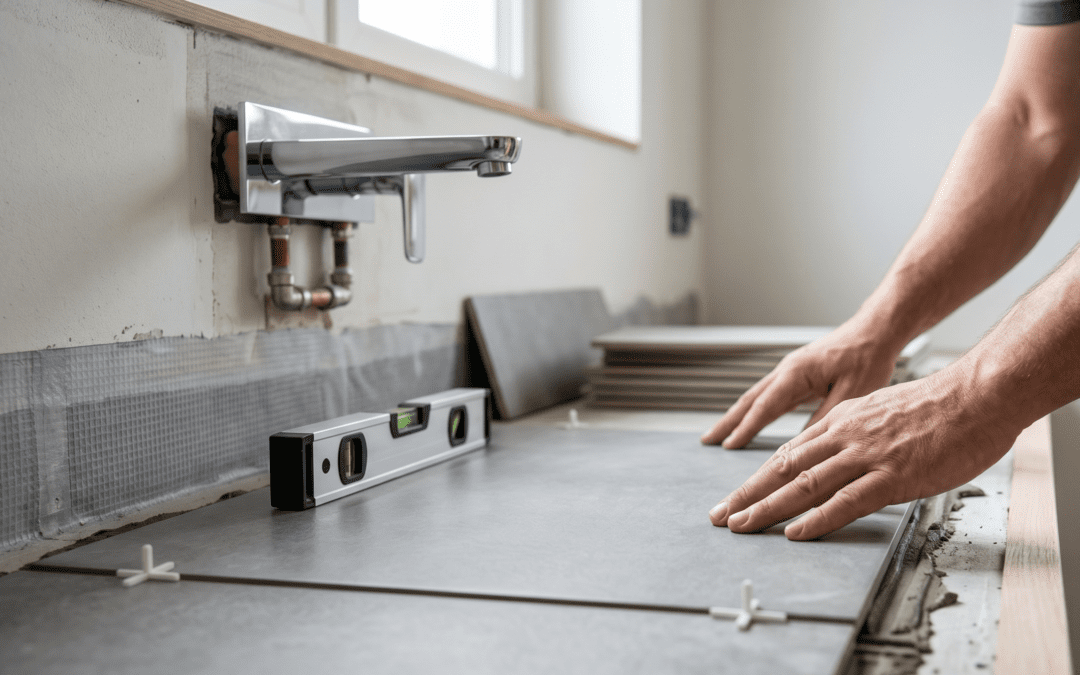
Tiling is often the longest stage. It covers floor prep, laying the tiles, letting them set, then grouting. Large tiles, feature walls, and detailed patterns all take more time. Good tiling cannot be hurried, and it is one of the parts you will look at every day for the next 20 years.
Fit-off and finishing
This is where the room comes back to life. The vanity, toilet, shower screen, mirror, tapware, and lights go in. The last step is sealing the edges with silicone, which needs a short time to cure before the shower can be used.
Once the silicone has set and the final checks are done, your bathroom is ready. For most standard jobs, that lands around the three to four week mark.
Why some bathrooms take twice as long
Two bathrooms of the same size can finish weeks apart. A few things explain the gap.
Long lead times on products. The items you choose, like the vanity, tiles, tapware, and shower screen, are sometimes called PC items. Custom vanities and stone benchtops can take 6 to 8 weeks to arrive. If they are ordered late, the whole job stalls after demolition while everyone waits. Ordering early is the single best way to keep things moving.
Layout and plumbing changes. Keep the toilet, shower, and vanity where they are, and the job is quicker. Move them, and you add plumbing, waterproofing, and tiling work that stretches the timeline.
Approvals. If your renovation involves structural change, or you live in a strata property, you may need approvals before work starts. That can add days or weeks at the front end.
Surprises behind the walls. Older homes can hide water-damaged subfloors or asbestos. If asbestos turns up in wall sheeting or old vinyl flooring, it has to be removed safely and legally before work continues. A builder who handles this in-house keeps the delay short, instead of pausing the job to bring in a separate crew.
Late decisions. Changing your mind on tiles or layout once the work has started causes some of the biggest delays. This is one of several common mistakes worth avoiding before you begin. Lock in your choices early.
If you only have one bathroom
A single-bathroom home needs a bit more planning, but families manage it all the time. A few simple steps help.
Talk to your builder about the schedule before the job starts, so you know which days will be the hardest. Set up a backup option, like a shower at a family member’s place, a gym, or a portable camp shower for short stints. If you have an ensuite or a second toilet, keep it working through the job. And try to time the renovation for a stretch when the household routine is calmer, like school term rather than a holiday week with everyone home.
The clearer the plan, the less stressful the few weeks of downtime feel.
How a good builder keeps it short
Most blowouts trace back to planning. When selections are finalised early, trades are locked in, and the builder works on one bathroom at a time, the project moves on a steady schedule. Curing times and compliance checks are quick and predictable. The delays that hurt are the products ordered too late and the decisions left to the last minute.
You can read more about how we run bathroom renovations across NSW, from the first plan to the final clean.
Planning your bathroom renovation?
If you want a clear timeline for your own bathroom in Campbelltown, Camden, Narellan, or anywhere across the Macarthur region, contact Final Finish C&B Services. We will walk you through the schedule, the stages, and how to keep your downtime as short as possible.
For what a full renovation involves from strip-out to handover, see bathroom renovations across Macarthur and South West Sydney.