
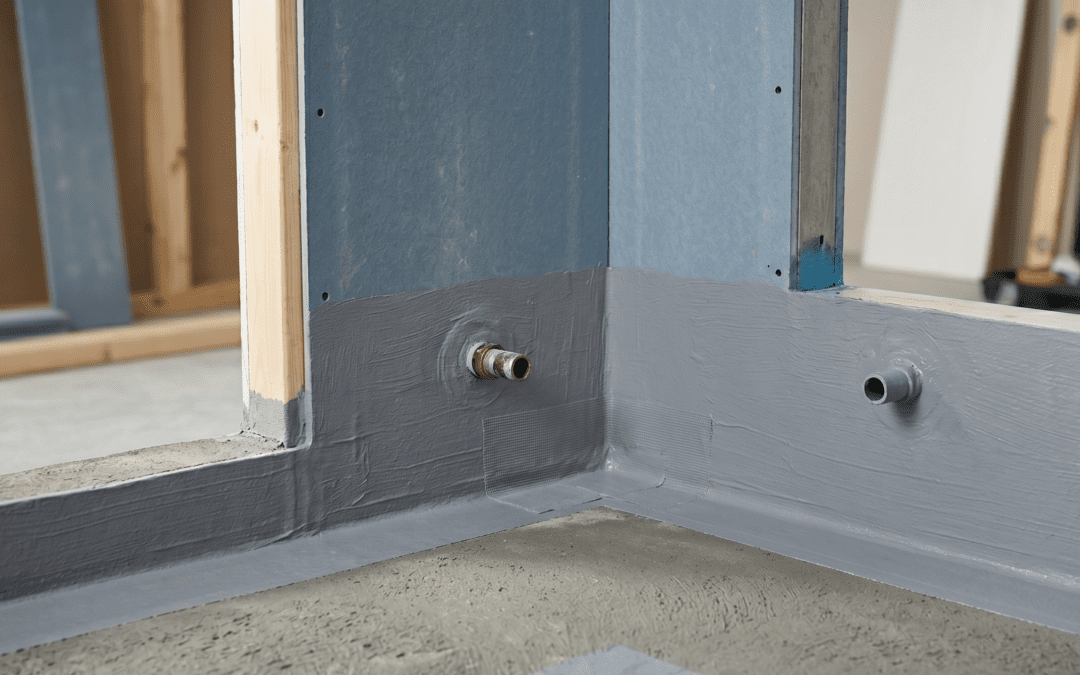
The most important part of your bathroom is the part you will never see. It sits under the tiles and behind the walls, doing its job in silence. It is the waterproof membrane, and when it fails, you get mould, rotten timber, and a renovation you have to do all over again.
In Australia, there is a rulebook that exists to stop that from happening. It is called AS 3740. Here is what it requires, why it protects you, and who is allowed to do this work in NSW.
What is AS 3740?
AS 3740 is the Australian Standard for waterproofing domestic wet areas. That means bathrooms, ensuites, and laundries: any room in a home where water lands on the floor or walls. The current version is AS 3740:2021, which replaced the older 2010 edition and tightened several rules.
The standard sets out the minimum requirements for how wet areas are designed and waterproofed. It covers the materials that can be used, where the membrane has to go, and how it must be installed. The National Construction Code points to AS 3740, which makes it the benchmark every compliant bathroom in NSW is built to.
In plain terms, AS 3740 is the difference between a bathroom that stays dry for decades and one that leaks behind the wall within a few years.
What AS 3740 actually requires
You do not need to memorise the standard, but it helps to know what a compliant bathroom looks like. These are the main rules in plain language.
- The entire shower floor must be fully waterproofed. Water has to drain to the floor waste, which is the drain in the floor.
- Shower walls must be waterproofed to at least 1800mm above the floor, or higher if the shower rose sits above that height.
- Other bathroom walls must be waterproofed to at least 150mm up from the floor. Around a bath, the walls are sealed to at least 150mm above the rim, especially where a shower runs over the bath.
- Every junction and penetration must be sealed. That means the corners where walls meet floors, and every spot where a pipe or drain passes through, get special attention so water cannot sneak past.
- The whole floor must be waterproofed if it is built on timber or particleboard, if the bathroom is upstairs, or if it has a floor waste. Apartments and second-storey bathrooms almost always need the full floor done.
- The membrane must be checked before tiling. Once tiles go on, nobody can see the waterproofing again, so it is inspected first.
The 2021 update also stopped the use of particleboard as a surface to waterproof over, because it does not hold up well in wet areas. Small details like this are why an experienced team matters.
Why these rules matter
Waterproofing is the wrong place to save money. A cut corner here costs more than anywhere else in the bathroom.
When a membrane is done poorly or skipped, water finds its way into the wall and floor. At first you see nothing. Months later, you get mould in the grout, a musty smell, lifting tiles, or soft, rotten timber under the floor. By then the only fix is to strip the bathroom back and start again.
Poor waterproofing can also void your home insurance and any warranty on the work. So a quote that comes in well below the others, where waterproofing is rushed or left off entirely, usually turns into a future bill. The money you save up front comes back later, with damage on top. This is one of the classic renovation mistakes to avoid, and it catches more homeowners than almost any other.
Who can legally do waterproofing in NSW
This is the part many homeowners do not realise. In NSW, waterproofing is licensed trade work. Under the rules set by NSW Fair Trading, a contractor licence is required for any waterproofing work valued at more than $5,000 in labour and materials. Owner-builders and unlicensed workers are not meant to be waterproofing wet areas.
A licensed waterproofer also issues a Waterproofing Certificate, sometimes called a Certificate of Compliance, when the work is done. It records who did the work, their licence number, and the membrane used. Keep this document safe, because you may need it for an insurance claim, a strata application, or a future sale.
The products matter too. Waterproofing membranes used in NSW must meet AS 4858, the standard for wet area membranes. A good contractor uses compliant products and applies them in the right number of coats.
If you ever want to check that a contractor is licensed, you can look them up on the NSW Fair Trading licence check tool before you hire.
How to make sure your bathroom is compliant
You do not need to be an expert to protect yourself. A few simple steps go a long way.
Ask your renovator about waterproofing before the job starts, and confirm it is included in the quote. Ask to see the membrane, or take a photo of it, after it goes on and before the tiles cover it. Request the Waterproofing Certificate at the end. And never let anyone rush the curing stage, because the membrane needs time to dry before tiling.
A renovator who handles waterproofing properly will be happy to talk you through all of this. You can see examples of our completed bathrooms and read how we run bathroom renovations across NSW from the first plan to the final seal.
Want a bathroom that is built to last?
Proper waterproofing is the foundation of every bathroom we build. If you are planning a renovation in Campbelltown, Camden, Narellan, or anywhere across the Macarthur region, contact Final Finish C&B Services for work that meets the standard and stays dry for the long haul.